Both China and U.S. have shared AI safety concerns
Countries are talking about a notification mechanism to curb reach of the technology.
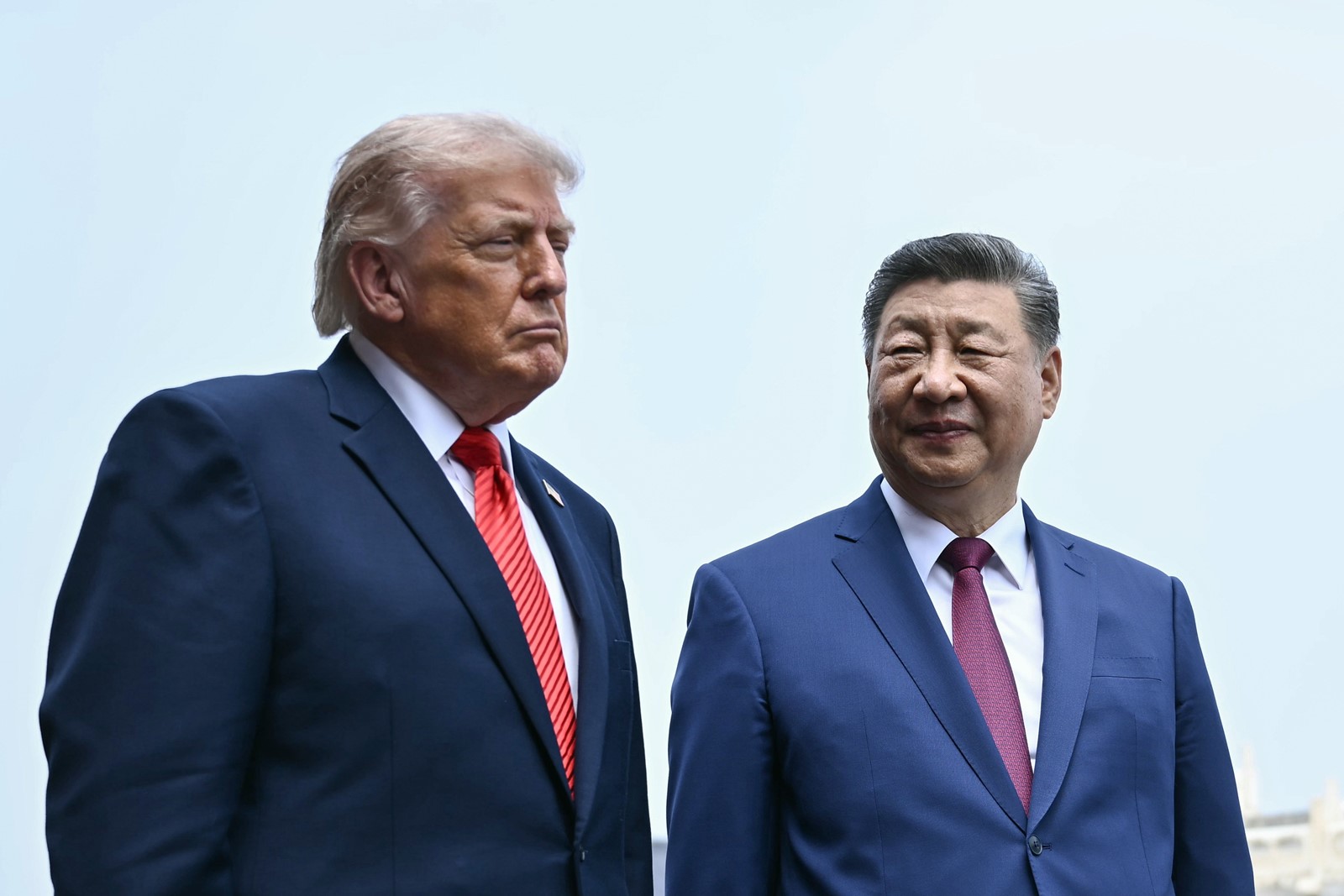
China's President Xi Jinping, right, and U.S. President Donald Trump, seen May 14, are expected to meet this week against a backdrop of rising concerns about the threats that rogue AI could pose to humanity. Brendan Smialowski - AP file
By Chan Ho-Him | Associated Press
U.S. President Donald Trump and Chinese leader Xi Jinping, leaders of rival nations in a race to dominate artificial intelligence, are expected to meet this week against a backdrop of rising concerns about the threats that rogue AI could pose to humanity.
The hopes for finding common ground on concerns around global AI safety are clouded by competition between the two countries. As China narrows the technology gap with the U.S., each country has expressed concern over how AI in the other's hands could hurt them.
"The U.S.-China conversation in AI is getting caught in the ups and downs in the broader U.S.-China relationship," said Scott Singer, co-director of the China AI Initiative at the Carnegie Endowment for International Peace.
On Sunday, U.S. Treasury Secretary Scott Bessent said after talks in New York with Chinese Vice Premier He Lifeng ahead of the meeting between Trump and Xi that the two countries discussed the setting up of a mechanism on AI dialogue and proposed a new "notification mechanism" for AI incidents that could impact national security.
The agenda could focus on AI risks that could harm both countries, such as AI-enabled cyberattacks, biological misuse, major model failures or loss of human control, said Sun Chenghao, a senior fellow at the Center for International Security and Strategy at Tsinghua University in Beijing. In that case, "there is still meaningful room for cooperation," Sun said.
"It would be a mistake to dismiss the entire safety debate as geopolitical competition," Sun said. "China itself is paying growing attention to loss-of-control risks, malicious use, cyber threats and the safety of AI agents."
Bessent said after his meeting with He that the U.S. proposed a notification mechanism between the United States and China, such as when there are incidents that rises up to the national security level from AI. "We want a shared vision of common goals and common threats," he told reporters.
Michael Kratsios, Trump's science and technology adviser, told Fox News Sunday it's important to have conversations with China about AI. "The key thing that we want to talk to them about is avoiding shared risks, and that's something that I think we can have a fruitful conversation on," Kratsios said.
Both governments are concerned about how AI could be used to attack critical infrastructure. In China, AI governance documents identify finance, electricity, telecommunications and transportation as areas potentially exposed to frontier-AI risks, Sun said.
The Chinese side has shown real interest in discussing issues like AI and cyber incident information sharing with U.S. experts, said Samm Sacks, a senior fellow at the Johns Hopkins School of Advanced International Studies' Institute for America, China, and the Future of Global Affairs.
If the two countries can discuss how to report and communicate in the event of an AI-related emergency, said Xiao Qian, vice dean of the Institute for AI International Governance at Tsinghua University, "it can help the two countries to build technical confidence over time."
 (0)
(0)
 0
0  0
0