Fed judge rejects request on ballots
DOJ wanted California officials to set aside 20,000 mailed-in votes.
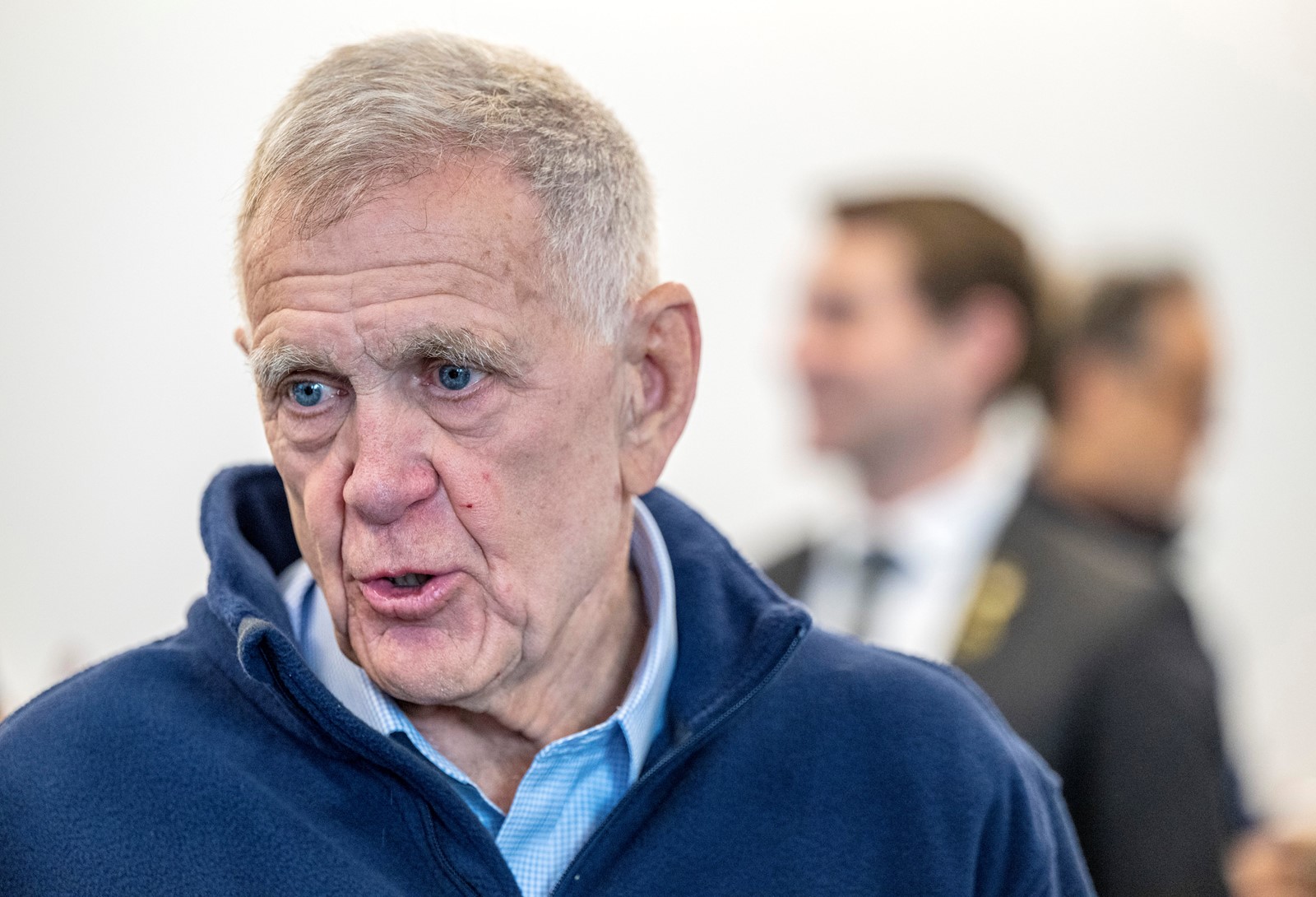
Carter
BY LINH TAT | SCNG
A Federal judge has denied a request by the Trump administration to issue a temporary restraining order that would have forced California election officials to set aside the mail ballots of tens of thousands of alleged noncitizen voters.
Approving the request “would wreak havoc and disrupt the election that is already underway, create a chilling effect on election workers and voters alike, and discount the votes of United States citizens,” U.S. District Judge David O. Carter wrote in a 26-page order Wednesday,.
“Eroded trust in our democracy is irreparable. Once a vote is segregated, lasting harm has occurred,” Carter went on to say.
“If the Executive can discount votes and threaten an ongoing election due to unproven allegations, then our democracy is in danger. This Court declines to be a party to such process.”
The Justice Department and White House did not immediately respond to a request for comment about the latest ruling.
But First Assistant U.S. Attorney Bill Essayli, responding to a comment from an attorney for the state of California that federal courts shouldn’t change election rules especially when an election is ongoing, insisted in a social media post that the federal government is “not changing the rules mid-election, we are enforcing them. It’s unlawful for noncitizens to vote.”
Carter’s decision came one day after hearing oral arguments from both sides in a case that is being followed closely around the country because of its implications less than a week before Election Day.
The U.S. Department of Justice alleges there are 20,000 “likely” noncitizens on California’s voter rolls who are ineligible to cast ballots, though California Secretary of State Shirley Weber previously said the federal government hadn’t provided proof.
In mid-October, the Justice Department sent a letter to L.A. County Registrar Dean Logan and informed Weber’s office the state had 48 hours to review a list of about 20,000 names to confirm if the individuals are U.S. citizens.
After California officials failed to meet that deadline, according to the DOJ, the Justice Department sued the state, Weber and Logan and sought a temporary restraining order to stop election officials in the state from further processing the ballots in question — at least until the citizenship status of a voter is confirmed.
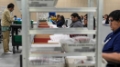
California sends a mail ballot to every registered voter. Most voters received their ballots in early October and voting has begun.
As of Tuesday, over 4 million mail ballots had been returned to election offices statewide, including more than 767,000 in L.A. County alone, according to the California secretary of state.
During Tuesday’s hearing, First Assistant U.S. Attorney Bill Essayli stressed the urgent need for a resolution, noting the massive number of marked ballots that local election offices have already received and, in some cases, started processing.
Essayli is the top U.S. prosecutor in L.A., though a federal judge ruled in a separate case Tuesday that the former Republican Assemblymember is serving in his current role illegally. Essayli disagreed, saying the president and U.S. attorney general “have every right to select supervisors within the Justice Department” and that he expected the U.S. Supreme Court to ultimately decide the issue.
“I look forward to serving in my current role until then,” he said in a statement.
As for the DOJ’s case against California over the 20,000 mail ballots, Essayli said in court Tuesday the federal government was making “a very narrow request” to temporarily set aside the ballots of “those suspected to be noncitizens.”
“We have not asked to void any ballots … (or) to cancel any ballots,” Essayli said.
“What we are doing is seeking to enforce” federal laws prohibiting voting by noncitizens, he added.
“We’re not telling California what they have to do. We’re telling (the state) what they can’t do. … What they cannot do is count these ballots once they’ve been informed of these prospective noncitizen ballots,” Essayli said.
But Michael Cohen, an attorney representing the state of California, said the Trump administration used data “known to be unreliable” in compiling their list of alleged noncitizens.
The state’s legal team also said that in July, the Trump administration alleged there might be more than 190,000 noncitizens on the state’s voter rolls, but by October, that number had dropped to 20,000, further questioning the data’s credibility.
Attorneys for California also said segregating the 20,000 ballots would disenfranchise voters.
“What we are talking about is stripping voting rights of thousands of people” until their innocence is proven, said Anne Bellows, an attorney for the state.
Logan, the L.A. County registrar, said in a statement last week that the county conducted a preliminary review of records after receiving the DOJ’s mid-October letter requesting the county verify the citizenship status of voters that the Trump administration suspected of being noncitizens.
Of the 20,930 records the DOJ submitted, Logan said, 7,035 (33.6%) had L.A. County addresses. And out of 200 names that the registrar’s office used as part of a sample pool, about 43% of the individuals had canceled voter registrations and more than 70% had no voting history, Logan said.
“Our office takes voter eligibility seriously, and any credible evidence of unlawful voting or attempts at disrupting elections warrants appropriate review,” Logan said, adding, “Claims of unlawful voting must be supported by verifiable evidence, not assumptions.”
In recent days, registrar offices in Orange, Riverside and San Bernardino counties have also received similar letters from the Justice Department seeking their cooperation in verifying the citizenship status of voters.
Although Carter did not rule immediately following Tuesday’s hearing on whether to grant a temporary restraining order as the Justice Department had requested, it was widely perceived that he would deny it.
Earlier this year, Carter dismissed a DOJ request that would have forced California officials to hand over the state’s full voter registration list to the federal government.
And during this week’s hearing, he questioned the need for an emergency temporary restraining order on the latest matter, saying the federal government could still indict people who voted illegally after the election since results aren’t certified until December.
The judge also appeared to reprimand members of the Trump administration, saying threats against election workers should end immediately. In recent weeks, federal prosecutors have implied that election workers who process ballots they’ve been told may have been cast by a noncitizen could be held criminally liable.
“This court believes it would be wise that any threats to state and county elected employees cease immediately. Good night,” Carter said before exiting the courtroom Tuesday.
Carter’s decision Wednesday came two days after an appeals court declined to rule on the case because the federal judge hadn’t had a chance to consider it himself.
City News Service contributed to this report.
 (0)
 0
 0