Supreme Court refuses to hear California Prop 50 redistricting case
Supreme Court denies Republican bid to block California redistricting plan voters approved in November election.
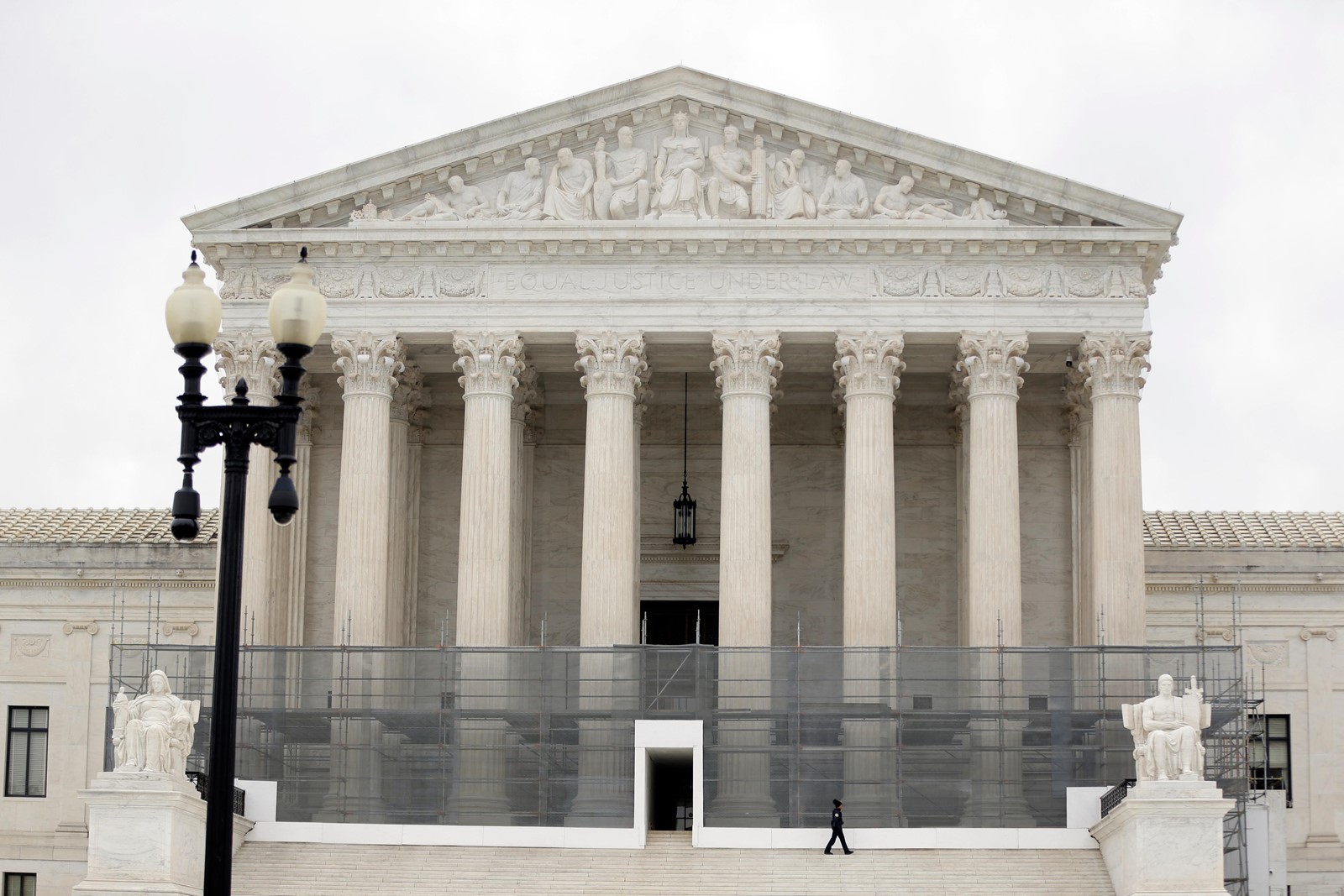
The U.S. Supreme Court on Wednesday rejected a request for an emergency injunction to block California's Proposition 50 congressional maps from taking effect in this year's midterm elections. Rahmat Gul - AP
By LINH TAT AND KAITLYN SCHALLHORN | STAFF WRITERS
With the U.S. Supreme Court clearing the way for California's newly gerrymandered congressional maps to be used in this year's midterm elections, the stage is set for California Democrats to try to notch five new House seats.
Meanwhile, the number of Republican seats is expected to be slashed by roughly half.
The nation's highest court on Wednesday denied an emergency appeal by a group of California Republicans and the U.S. Department of Justice, which made a last-ditch effort to have the Proposition 50 maps that voters approved in November overturned ahead of the 2026 elections.
Although the Supreme Court chose not to grant an emergency injunction to block the new maps from going into effect this year, the legal challenge does not end here.
The plaintiffs in the case, which include the California Republican Party, plan to continue challenging the constitutionality of the maps, though any future ruling to overturn them - should the court render such a decision - would apply to the 2028 elections.
The plaintiffs had argued that the Proposition 50 maps were drawn to favor one race - Hispanics - and that racial gerrymandering is illegal.
Following Wednesday's Supreme Court decision, Michael Columbo, an attorney for the plaintiffs, said although there won't be an emergency injunction to stop the Proposition 50 maps "from being used in this year's elections, our case persists, and we will continue to vigorously argue for Equal Protection under the law for all of California's voters."
Of California's 52 House seats, 43 are represented by Democrats. Only eight are held by Republicans, and one seat is vacant. That seat, in Northern California, was held by Republican Rep. Doug LaMalfa, who died last month. A special election for his successor will take place in August.
But with the new Proposition 50 maps, Republicans in California - already disproportionately represented in Congress - will likely only hold a handful of House seats based on voter registration data.
Gov. Gavin Newsom, who led the charge to draw new, gerrymandered maps to counter a similar effort by Texas Republicans last year, at the behest of President Donald Trump, celebrated Wednesday's court decision.
"Donald Trump said he was 'entitled' to five more congressional seats in Texas," Newsom said. "He started this redistricting war. He lost, and he'll lose again in November."
Neither the White House nor the Department of Justice responded immediately to a request for comment.
State Sen. Tony Strickland, R-Huntington Beach, meanwhile, called the court decision "unfortunate."
Under the new maps, Huntington Beach and parts of Newport Beach - two Orange County communities - are lumped into the same congressional district as Los Angeles County's Long Beach. That district, the 42nd Congressional District, is represented by progressive Rep. Robert Garcia, D-Long Beach.
Although the Orange County cities are currently represented in the House by a Democrat, some conservative voters moving into that district under the new maps are concerned that if Garcia is reelected, they will be represented by someone whose values or political views do not align with their own.
"Our Constitution is built on competitive elections and voter choice, not predetermined outcomes," Strickland said. "When elections are engineered in advance, Democrats, Republicans and independents all lose, and our democracy is weakened."
Longtime Republican strategist Jon Fleischman said that with the new maps, perhaps only one congressional district in all of California is now really competitive; the rest are either solidly blue or solidly red.
"It's not good for democracy," said Fleischman, who previously served as executive director of the California Republican Party. "At the end of the day, if you're a voter, you want a robust discussion about the ideas and have a real opportunity to make a decision about which direction you think the country should be going."
The one district that Fleischman believes is still competitive is the 48th Congressional District, currently held by Rep. Darrell Issa, R-San Diego.
And with the Proposition 50 maps now settled for this year's races at least, it sets up an intraparty contest between Reps. Young Kim and Ken Calvert, both Republican incumbents, who have said they will vie for California's 40th Congressional District in Orange and Riverside counties.
No justices dissented from the brief order denying the appeal without explanation, as is common on the court's emergency docket.
The justices had previously allowed Texas' Republican-friendly map to be used in 2026, despite a lower-court ruling that it likely discriminates on the basis of race.
Conservative Justice Samuel Alito wrote in December that it appeared both states had adopted new maps for political advantage, which the high court has previously ruled cannot be a basis for a federal lawsuit.
Filing for congressional primaries in California begins on Monday.
The Associated Press contributed to this report.
 (0)
(0)
 0
0  0
0