Trump vows to double Canadian auto tariff
Importers would pay 50% for non-U.S. content, though specifics of how a carve-out would work are unclear.
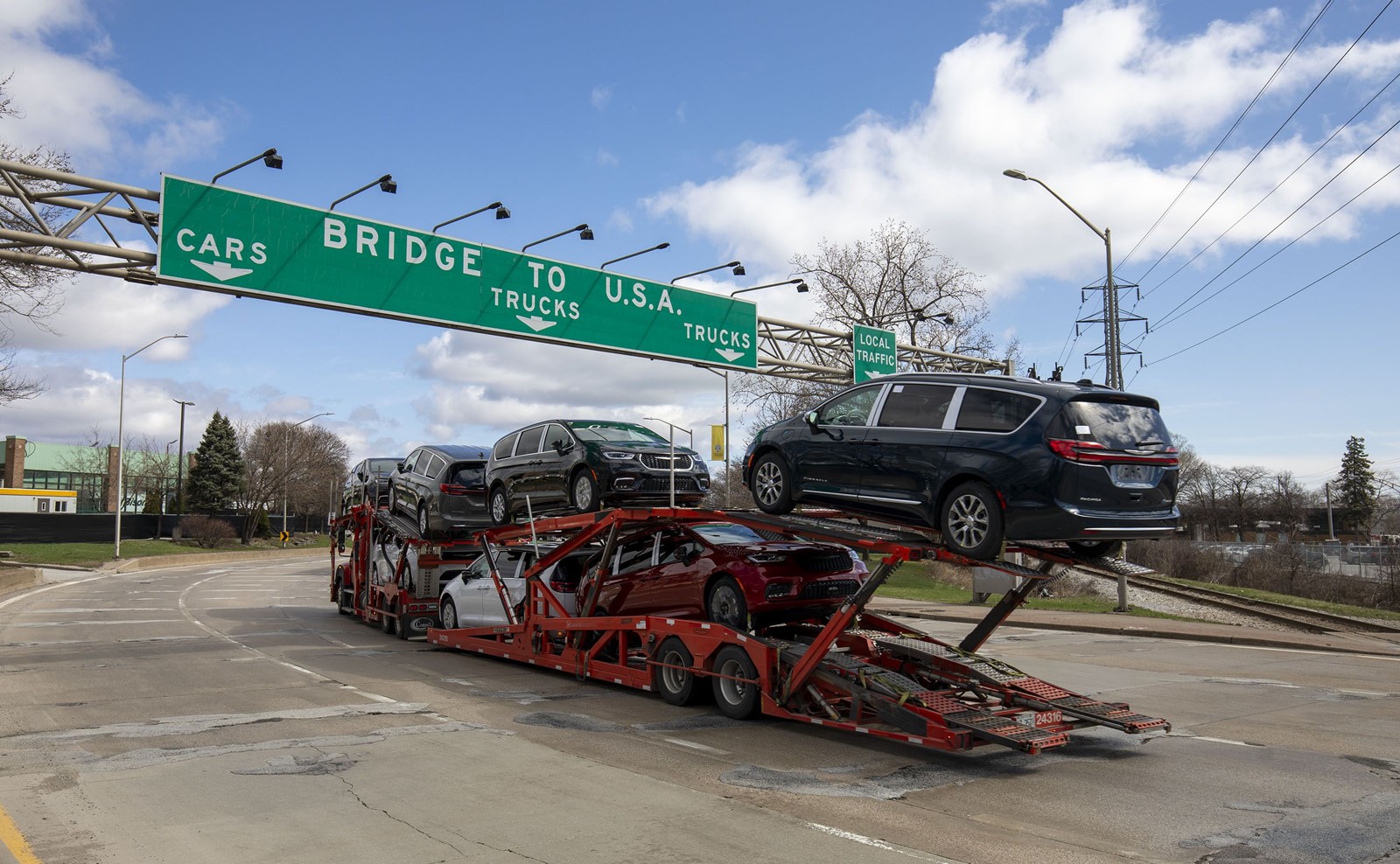
A car hauler truck makes its way to the Ambassador Bridge to cross into the United States at Detroit in Windsor, Ontario. U.S. and Canadian supply chains have become intertwined over the past decades. Bill Pugliano - Getty Images.
By JOSH WINGROVE | BLOOMBERG
President Donald Trump pledged to double the automobile tariff on Canadian vehicles and parts starting next year, escalating the spiraling trade fight between the two economies.
Trump posted on Monday that "Tariffs on all Cars, Trucks, both large and small, Automotive Parts, and Steel" would rise to 50%, effective Jan. 1. The current auto rate is 25% but is applied only to non-U.S. content. Imported steel already faces a 50% charge.
The latest tariff threat comes after negotiations between the U.S. and Canada broke down Friday, which led to a 50% levy on billions of dollar's worth of Canadian goods to take effect Canadian Prime Minister Mark Carney has announced a package of retaliatory duties.
Following through on the auto tariffs could significantly disrupt a supply chain between the U.S. and Canada that has become deeply integrated over the past few decades. Trump has previously pledged to tariff auto parts but had not yet proceeded with the logistically complicated task.
It was not immediately clear how Trump would address the carve-out for U.S. content in vehicles, which substantially affects the tariff rate. Levies on Canadian vehicles, in practical are about half the headline rate because the vehicles are typically half U.S.-made.
It is also unclear if the new tariffs Trump announced Monday will ever be enacted. The Jan 1 implementation sets up runway for potential negotiations, even as the Canadians see littel chance of those resuming before the midterm elections in November. Carney is set to respond to the weekend tariffs with levies of his own on Sept. 8 and the U.S. has threatened to escalate further if he does.
Even as Trump ratcheted up his tariff threats, other administration officials signaled they were open to resuming discussions with Canada.
"I think he would like Canada to come to the table and negotiate in good faith," U.S. Treasury Secretary Scott Bessent told reporters Monday.
Vice President JD Vance, speaking at an event in Maine, said negotiations were "still ongoing," but provided no details on any formal talks. He went on to criticize Canada, saying the country had allowed itself "to be used as a backdoor for Chinese goods" and the "Canada and China have been the two worst countries when it comes to trade policy anywhere."
The escalating trade fight between the U.S. and Canada poses yet another challenge for Trump ahead of the looming midterm elections that will hinge on voter perceptions of his economic agenda. The clash with Canada threatens to worsen voters' worries about high costs of living and complicate the administration's bid to lower borrowing costs.
Monday's threat was Trump's most fulsome response yet since the sudden collapse of tract, talks killed an emerging deal to head off the new levies and adjust existing ones. The two sides have blamed each other for the collapse of negotiations.
U.S. Trade Representative Jamieson Greer said the deal offered Canada tariff reductions, including for steel, aluminum and autos, while Carney said he walked away because the U.S. demands that were too great. The new measures Trump announced Monday targ1 the Canadian province of Ontario in particular. The province is led by Premier Doug Ford, whose pugnacious approach to talks has riled the Trump administration.
 (0)
(0)
 0
0  0
0